
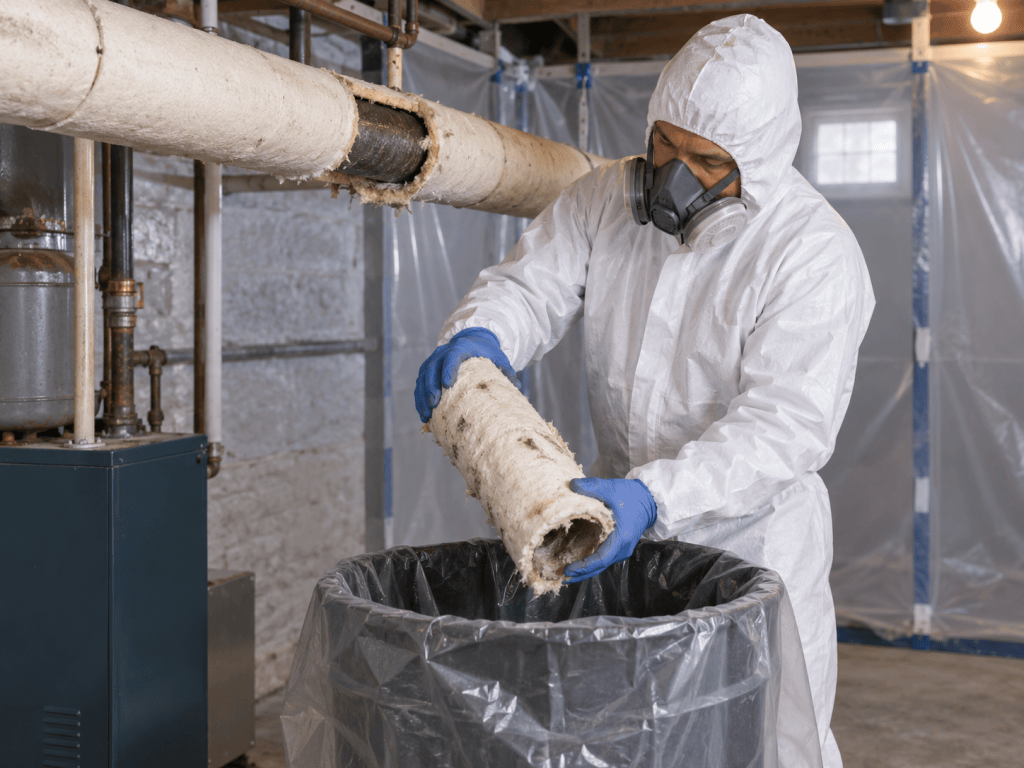



Professional asbestos abatement helps safely remove, repair, enclose, or otherwise manage asbestos-containing materials in homes and buildings. If asbestos has been identified during testing, the next step may be to have the affected material addressed before renovation, demolition, or repair work can continue.
Asbestos fibers can become airborne when materials are cut, broken, sanded, drilled, removed, or handled improperly. Because these fibers are not visible to the naked eye, asbestos work requires specialized training, protective equipment, containment procedures, and proper disposal methods.
When Is Asbestos Abatement Needed?
Not every material containing asbestos must be removed immediately. Materials that are intact and unlikely to be disturbed may sometimes be managed in place. Abatement may become necessary when asbestos-containing material is damaged, deteriorating, or located within an active construction area.
Asbestos abatement may be needed when:
- Testing confirms that a material contains asbestos
- A renovation or demolition will disturb the material
- Pipe or boiler insulation is damaged or deteriorating
- Flooring, plaster, ceilings, or walls must be removed
- Asbestos-containing material is crumbling or releasing debris
- A contractor cannot continue work until the material is addressed
- A property owner needs to correct an identified asbestos condition
- Fire, water, or structural damage has disturbed suspect materials
Materials Commonly Addressed During Abatement
Asbestos was used in many residential, commercial, and industrial building products. The appropriate abatement method depends on the material, its condition, its location, and the planned work.
Common materials include:
- Pipe and boiler insulation
- Vinyl floor tile and sheet flooring
- Black flooring adhesive or mastic
- Plaster and joint compound
- Ceiling tiles and textured coatings
- HVAC duct insulation
- Roofing and siding materials
- Cement board
- Fireproofing materials
- Vermiculite insulation
- Other asbestos-containing building materials
Why You Should Hire a Qualified Asbestos Professional
Asbestos abatement should not be treated as an ordinary demolition or home-improvement project. Improper handling can spread asbestos fibers beyond the work area and contaminate surrounding rooms, surfaces, tools, clothing, and equipment.
A qualified asbestos professional understands how to establish a regulated work area, control airborne fibers, use proper protective equipment, safely package waste, and clean the affected space. Hiring appropriately credentialed professionals also helps ensure that the work follows applicable state and local requirements.
Before hiring an asbestos contractor, ask for proof of:
- A current New York State asbestos-handling license
- Appropriate worker and supervisor certificates
- Insurance coverage for asbestos-related work
- A written description of the work and containment procedures
- Plans for lawful transportation and disposal
- Any required project notifications or permits
- Final documentation and air-monitoring information, when applicable
New York State Asbestos Requirements
New York asbestos projects are regulated by the Department of Labor under Industrial Code Rule 56. The state requires asbestos contractors to be licensed and people working on asbestos projects to hold certificates appropriate to their responsibilities.
Depending on the project, New York requirements may also include:
- An asbestos survey before renovation or demolition
- Use of a licensed asbestos contractor
- Certified asbestos workers and supervisors
- Required containment and abatement procedures
- Project notification for qualifying larger projects
- Air monitoring and project documentation
- Proper packaging, transportation, and disposal of asbestos waste
Requirements vary according to the material, amount of asbestos, building type, and scope of work. Property owners should confirm that the contractor holds the appropriate current credentials before work begins.
Abatement Before Renovation or Demolition
Older Hudson Valley properties often contain multiple layers of flooring, plaster, insulation, roofing, and other materials installed during different periods. If testing identifies asbestos within an area that will be disturbed, abatement may need to be completed before other contractors can begin their work.
Addressing asbestos early can help prevent unexpected construction delays. Testing and planning before demolition starts also gives the property owner time to obtain estimates, select a properly licensed contractor, and coordinate the abatement with the larger project schedule.
Residential and Commercial Asbestos Abatement
Asbestos abatement may be required for many types of properties and projects, including:
- Single-family homes
- Apartment and multifamily buildings
- Commercial properties
- Offices and retail spaces
- Schools and institutional buildings
- Industrial properties
- Renovation and remodeling projects
- Building demolition
- Fire- or water-damaged properties
The scope of work should be based on the asbestos survey, the condition of the materials, and the activities planned for the property.
Request an Asbestos Abatement Quote
Tell us about your property, the materials involved, and the work you are planning. If you already have an asbestos survey or laboratory report, include that information with your request.
Serving the Hudson Valley
Need asbestos abatement for a home, commercial property, renovation, or demolition project in the Hudson Valley? Contact us to discuss the property, review the project details, and request an estimate.
 Hudson Valley Asbestos Testing